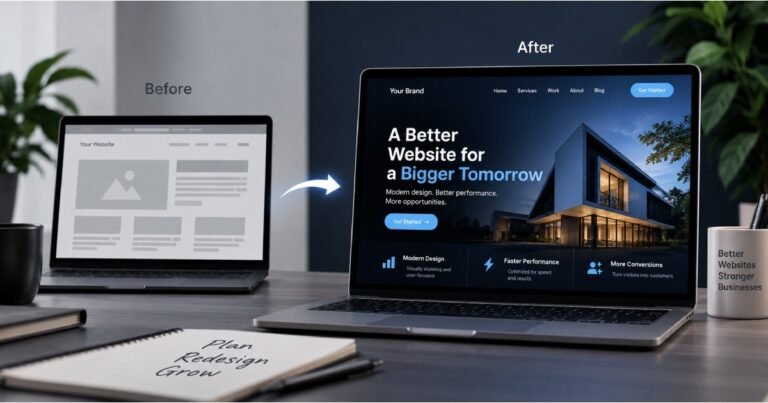

Your website is often the first interaction people have with your business. Before they call you, visit your office, or request a quote, they usually visit your website to learn who you are, what you offer, and whether your business is trustworthy. Within just a few seconds, visitors begin forming opinions based on your website’s appearance, speed, navigation, and overall user experience.
Many businesses invest significant time and money into launching a website, only to leave it untouched for years. While your business continues to grow, introduce new services, adopt modern branding, and improve customer experiences, your website may still reflect where your business was five or even ten years ago.
An outdated website doesn’t just affect your company’s image—it can directly impact enquiries, conversions, and search engine rankings. Slow loading pages, poor mobile experiences, confusing navigation, outdated content, and weak calls-to-action often discourage visitors from taking the next step. Instead of contacting your business, they simply leave and choose a competitor with a more modern online presence.
Ready to Modernise Your Website?
Transform your outdated website into a fast, responsive, and SEO-friendly platform that helps your business attract more visitors and generate more leads.
Website redesign isn’t about changing colours or adding a few new images. It’s about improving how your website performs, communicates, and supports your business goals. A successful redesign focuses on user experience, speed, accessibility, search engine optimisation, and conversion optimisation while ensuring your website accurately represents your brand.
Whether you’re a local business, a growing company, or an established organisation, recognising the right time to redesign your website can help you stay competitive and create a stronger online presence.
In this guide, we’ll explore the twelve most common signs that indicate your website needs a redesign, explain why each one matters, and show how a professionally redesigned website can help attract more visitors, generate more leads, and support long-term business growth.
Why Website Redesign Is More Than Just a New Look
One of the biggest misconceptions about website redesign is that it’s purely a visual update. While improving the appearance of your website is certainly part of the process, modern website redesign goes much further.
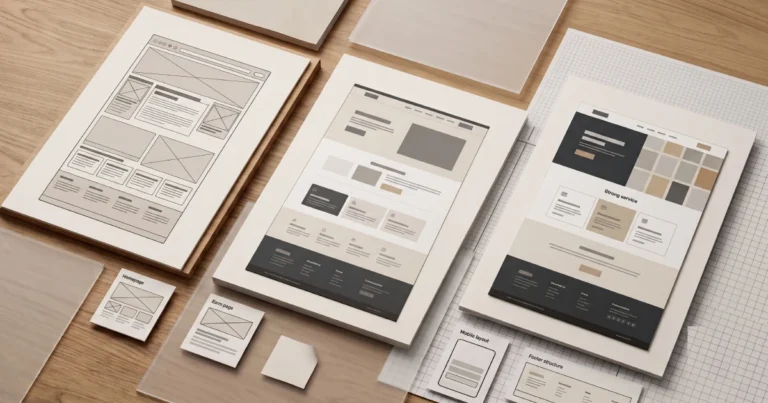
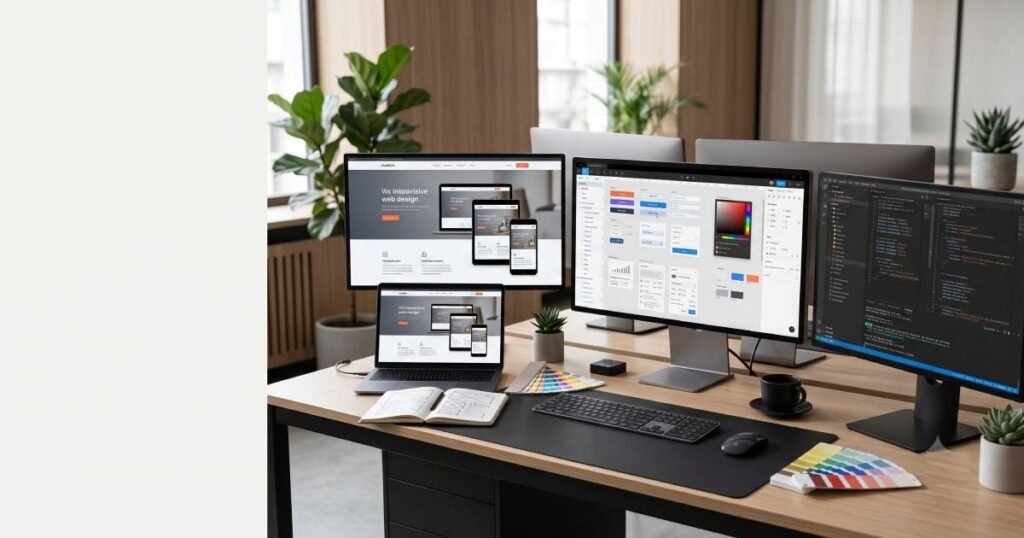
A professional redesign evaluates every aspect of your website, including its performance, usability, technical structure, content, security, and ability to convert visitors into customers. The objective isn’t simply to make the website look modern; it’s to ensure it works better for both your users and your business.
Think of your website as your physical office. Over time, furniture becomes outdated, technology ages, branding changes, and customer expectations evolve. Eventually, refreshing the space becomes necessary to maintain a professional image and provide a better customer experience. The same principle applies to your website.
A modern website redesign can help your business:
- Improve first impressions and strengthen credibility
- Increase enquiries and lead generation
- Enhance mobile responsiveness
- Improve website speed and Core Web Vitals
- Support better search engine rankings
- Simplify content management
- Reflect your latest services and branding
- Prepare your business for future growth
Rather than viewing a redesign as an expense, it’s more helpful to think of it as an investment that continues delivering value long after the website is launched.
Sign #1: Your Website Looks Outdated
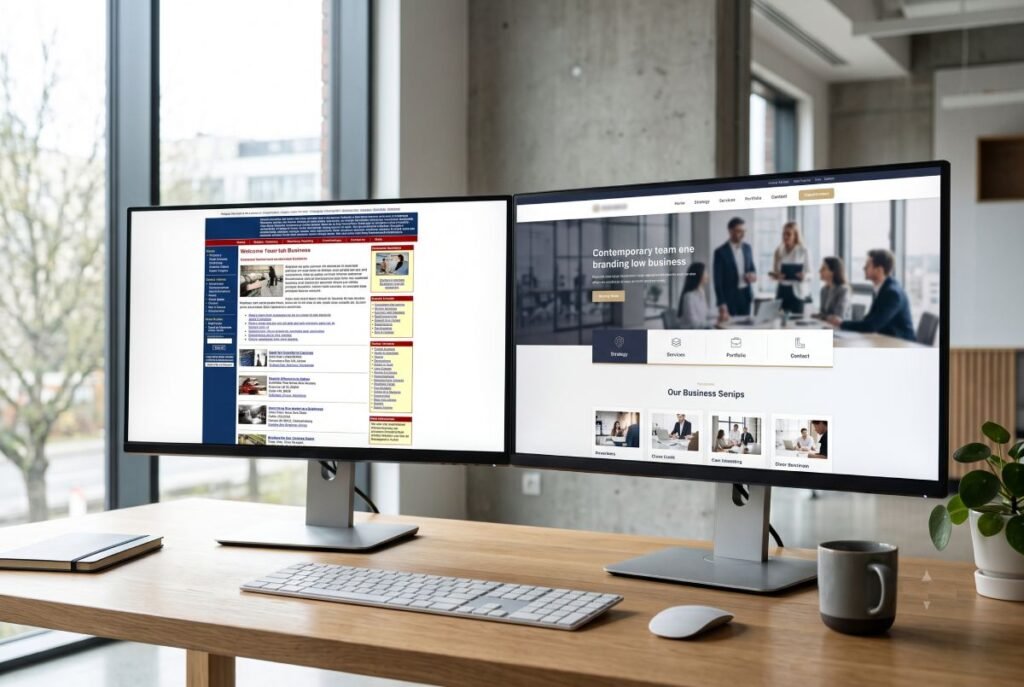
Design trends evolve every year. A website that looked modern several years ago may now appear cluttered, difficult to navigate, or visually unappealing compared to competitors.
Visitors naturally associate the quality of your website with the quality of your business. If your website uses outdated layouts, inconsistent fonts, low-quality images, excessive animations, or old-fashioned design elements, potential customers may begin questioning whether your business is still active or capable of meeting their expectations.
A modern website doesn’t need flashy animations or complex graphics. Instead, it focuses on clean layouts, consistent branding, generous spacing, readable typography, and intuitive navigation that allows visitors to find information quickly.
Ask yourself a few simple questions:
- Does your website still reflect your current brand identity?
- Are the colours, fonts, and imagery consistent with your business today?
- Would you feel confident showing your website to a potential client?
- Does your homepage immediately communicate what your business offers?
If the answer to any of these questions is “no,” your website may already be sending the wrong message before visitors read a single word.
A website redesign allows you to modernise your visual identity while creating a more professional and trustworthy first impression.
Sign #2: Your Website Isn’t Mobile-Friendly
More people browse the internet on smartphones than ever before. Whether someone is searching for a local service, comparing businesses, or reading about your products, there’s a strong chance they’re doing it on a mobile device.
If your website doesn’t adapt properly to smaller screens, visitors are likely to become frustrated. Tiny text, overlapping elements, buttons that are difficult to tap, and layouts that require horizontal scrolling all create a poor user experience.
A responsive website automatically adjusts to different screen sizes, ensuring visitors enjoy the same high-quality experience regardless of the device they’re using.
Beyond improving usability, mobile responsiveness also affects your visibility in search engines. Search engines prioritise mobile-friendly websites because they provide a better experience for users.
If your current website still feels like a desktop website squeezed onto a phone screen, it’s a strong indication that a redesign is needed.
Sign #3: Your Website Loads Too Slowly
Website speed is no longer just a technical consideration—it’s one of the most important factors affecting user experience, search engine rankings, and conversions.
Think about your own browsing habits. If a website takes too long to load, you probably don’t wait around. You close the tab and move on to another website. Your potential customers behave exactly the same way.
Even a delay of a few seconds can cause visitors to leave before they’ve explored your services or contacted your business. For businesses investing in SEO or paid advertising, a slow website can also mean wasting valuable marketing budget because visitors leave before taking any action.
Slow websites are commonly caused by:
- Large, unoptimised images
- Outdated code
- Too many plugins
- Poor-quality hosting
- Unnecessary animations and scripts
- Lack of caching and performance optimisation
A website redesign gives developers the opportunity to rebuild your website using modern development practices. Images can be compressed without sacrificing quality, unnecessary code removed, and performance optimised to create a faster browsing experience.
A fast website not only improves customer satisfaction but also encourages visitors to explore more pages, spend longer on your website, and complete enquiries or purchases.
Sign #4: You’re Not Getting Enough Leads or Enquiries
A website should do more than display information—it should help your business grow.
If your website receives visitors but very few people contact you, request a quote, or complete a purchase, the problem may not be your marketing. It could be your website itself.
Many older websites lack clear calls-to-action, have confusing page layouts, or make it difficult for visitors to know what to do next. Some websites hide contact information, use lengthy enquiry forms, or fail to communicate the value of their services.
During a website redesign, every page should be reviewed with one important question in mind:
“What action do we want visitors to take?”
Whether it’s booking a consultation, requesting a quote, calling your office, or completing an online purchase, your website should naturally guide visitors towards that goal.
Improving conversions often involves small but meaningful changes, such as:
- Clear call-to-action buttons
- Better placement of contact forms
- Simplified enquiry processes
- Stronger service descriptions
- Trust-building elements like testimonials and certifications
A website that attracts visitors but doesn’t convert them is missing one of its most important purposes.
Sign #5: Your Business Has Changed, but Your Website Hasn’t
Businesses evolve over time. You may have expanded your services, entered new markets, updated your branding, hired additional team members, or changed your target audience.
Unfortunately, many websites don’t evolve at the same pace.
It’s common to see businesses offering services that aren’t even mentioned on their website or using outdated branding that no longer reflects who they are today. This creates confusion for visitors and weakens your professional image.
Ask yourself these questions:
- Does your website showcase all your current services?
- Are your contact details up to date?
- Does your branding match your current identity?
- Are your team members and company information accurate?
- Does your messaging still represent your business?
If the answer is no, your website may be presenting an outdated version of your company.
A redesign provides the perfect opportunity to refresh your messaging, improve your branding, and ensure your online presence accurately reflects the business you’ve become.
Sign #6: Your Website Is Difficult to Navigate
Imagine walking into a supermarket where nothing is labelled, products are placed randomly, and every aisle leads to another dead end.
That’s exactly how visitors feel when they land on a website with poor navigation.
If users can’t quickly find the information they’re looking for, they won’t spend time searching—they’ll simply leave.
Common navigation problems include:
- Overcrowded menus
- Too many dropdown levels
- Broken links
- Inconsistent page layouts
- Hidden contact information
- Confusing page names
A professionally redesigned website focuses on simplicity.
Visitors should immediately understand:
- What your business does
- What services you offer
- How to contact you
- What action they should take next
Clear navigation improves both user experience and SEO by helping search engines understand your website structure.
Sign #7: Your Website Doesn’t Rank Well on Google
If you’ve invested in SEO but your rankings remain poor, your website itself may be limiting your results.
Search engines evaluate much more than keywords. They also consider factors such as:
- Website speed
- Mobile responsiveness
- Secure HTTPS connection
- Clean website structure
- User experience
- Core Web Vitals
- Internal linking
- Crawlability
Older websites often struggle because they were built before many of these factors became ranking signals.
A website redesign gives developers the opportunity to rebuild the technical foundation of your website while preserving valuable content and improving SEO performance.
Although a redesign alone won’t guarantee first-page rankings, it creates a stronger platform for future SEO efforts and helps search engines better understand and index your website.
A modern, technically sound website is far more likely to support long-term organic growth than an outdated one struggling with performance and usability issues.
Sign #8: Your Website Is Difficult to Update
Your website should be easy to manage, not something you avoid because every small update requires technical assistance.
Many older websites were built on outdated systems or rely on complex code that makes even simple tasks frustrating. Updating a phone number, replacing an image, publishing a blog post, or adding a new service shouldn’t require contacting a developer every time.
A modern website should give you control over your content through an intuitive content management system (CMS). Whether you want to publish articles, update pricing, announce new services, or refresh your homepage, the process should be straightforward and efficient.
If updating your website feels like a complicated project instead of a routine task, it’s a clear sign that your current platform is limiting your business.
A website redesign allows you to move to a modern CMS that simplifies content management while keeping your website secure, organised, and easy to maintain.
Sign #9: Your Website Doesn’t Reflect Your Brand
Your brand is much more than a logo. It’s how customers recognise your business, understand your values, and remember your company.
Over the years, many businesses update their branding by introducing a new logo, colour palette, messaging, or visual identity. However, their website often remains unchanged, creating an inconsistent experience for visitors.
Imagine a customer seeing your modern branding on social media, then visiting a website that looks completely different. This inconsistency can reduce trust and make your business appear less professional.
A website redesign gives you the opportunity to create a consistent brand experience across every page. This includes updating:
- Typography
- Colour palette
- Images
- Icons
- Messaging
- Tone of voice
- Visual hierarchy
Consistency helps visitors recognise your brand instantly while creating a more polished and memorable online presence.
Sign #10: Your Competitors Have Better Websites
Your competitors are constantly improving their online presence, and your customers are comparing businesses before making a decision.
If competing websites are faster, easier to navigate, and more visually appealing, visitors may naturally choose them over your business—even if your products or services are better.
Take a moment to compare your website with three of your main competitors.
Ask yourself:
- Which website looks more modern?
- Which one is easier to navigate?
- Which loads faster?
- Which provides more useful information?
- Which would you trust if you were a customer?
This exercise often reveals opportunities for improvement that may have gone unnoticed.
A website redesign isn’t about copying competitors. It’s about creating a better experience that helps your business stand out while meeting the expectations of today’s users.
Sign #11: Your Website Isn’t Supporting Your Marketing
Your website should work alongside your marketing efforts, not against them.
Whether you’re investing in SEO, Google Ads, social media, email campaigns, or content marketing, every campaign eventually brings visitors back to your website.
If those visitors arrive on outdated landing pages, confusing service pages, or slow-loading websites, your marketing investment becomes less effective.
A professionally redesigned website supports marketing by providing:
- Better landing pages
- Clear conversion paths
- Strong calls-to-action
- Faster page loading
- Improved mobile experience
- Better content structure
- Easier tracking through analytics
Instead of acting as a digital brochure, your website becomes a tool that actively supports lead generation and business growth.
Sign #12: You’re Planning for Future Growth
Many businesses redesign their website only after problems become impossible to ignore. A better approach is to redesign before your website starts limiting your growth.
Perhaps you’re planning to:
- Launch new services
- Expand into new locations
- Introduce online bookings
- Sell products online
- Publish regular blog content
- Integrate CRM software
- Improve SEO
- Refresh your brand
Your website should be ready to support these goals.
A modern website is built with scalability in mind, allowing new pages, features, and integrations to be added without rebuilding everything from scratch.
Planning for future growth ensures your website continues delivering value for years rather than becoming outdated after a short period.
Website Redesign Checklist
Before deciding to redesign your website, review the following checklist.
- Does your website look modern and professional?
- Is it fully responsive on mobile devices?
- Does every page load quickly?
- Are visitors finding the information they need?
- Are you generating enough enquiries?
- Does your branding accurately represent your business?
- Is your website easy to update?
- Does it support your current marketing strategy?
- Is it optimised for search engines?
- Can it support your future business growth?
If you answered “No” to several of these questions, a website redesign could be one of the most valuable investments you make for your business.
Final Thoughts
Your website should grow alongside your business. If it’s outdated, slow, difficult to manage, or no longer helping you attract customers, it may be holding your business back without you even realising it.
A professional website redesign isn’t simply about creating a fresh appearance. It’s about improving performance, strengthening your brand, enhancing user experience, and building a website that supports your marketing, sales, and long-term business goals.
Rather than waiting until your website becomes a problem, regularly evaluate its performance and make improvements when necessary. Investing in the right redesign today can help you stay ahead of competitors, improve customer confidence, and create a stronger digital presence for years to come.
Frequently Asked Questions
Most businesses benefit from reviewing their website every three to five years. However, if your branding, services, technology, or customer expectations have changed significantly, it may be worth considering a redesign sooner.
A well-planned redesign should preserve your existing SEO value while improving technical performance, mobile responsiveness, page speed, and user experience. Proper planning is essential to avoid losing rankings during the transition.
A website refresh focuses on visual updates such as colours, images, or typography while keeping the overall structure intact. A website redesign is more comprehensive and often includes improvements to layout, functionality, performance, navigation, SEO, and user experience.
The timeline depends on the size and complexity of the project. A small business website may take a few weeks, while larger websites with custom functionality, integrations, or extensive content can take several months.
If your website has a solid technical foundation, a redesign may be enough. However, if it’s built on outdated technology, suffers from performance issues, or no longer meets your business needs, rebuilding the website may be the better long-term solution.
Need Help With Your Website?
Whether you need HubSpot CMS development, Webflow development, WordPress development, or technical SEO, Zelthra can help you build a website that performs.