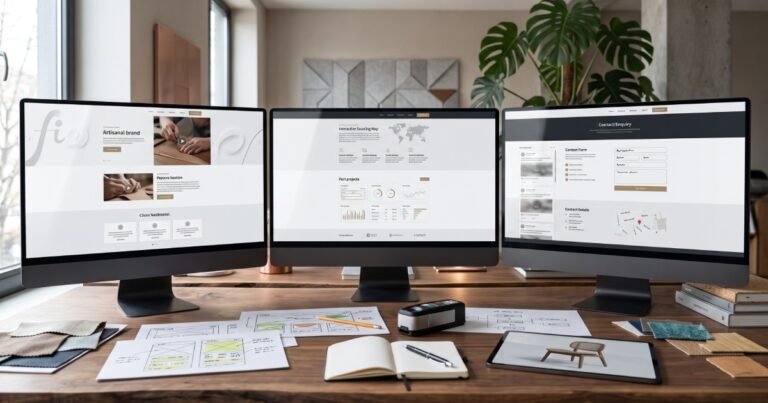

Choosing a website development company is a decision that can have a long-term impact on your business.
Your website is often the first place potential customers go to learn about your company. It needs to look professional, work properly on every device, load quickly, support SEO, and make it easy for visitors to take the next step.
But with so many agencies, freelancers, and development companies available, choosing the right partner isn’t always straightforward.
Some companies specialise in WordPress. Others focus on Webflow or HubSpot. Some primarily work with templates, while others build websites from scratch.
Price can also vary significantly between providers.
So how do you know which website development company is actually right for your business?
Before signing a contract, there are several important questions worth asking.
Why Choosing the Right Website Development Company Matters
A website isn’t something you should have to rebuild every few months because the original development wasn’t scalable or the platform wasn’t suitable for your business.
The right development partner should understand more than just code.
They should understand your business goals, your customers, your content, your marketing requirements, and what you want the website to accomplish.
A good website development company can help you build a foundation that supports your business for years.
If you’re looking for a complete website solution, start by reviewing our Website Development Services.
1. Do You Have Experience Building Websites Like Mine?
The first question to ask is whether the company has experience with websites similar to yours.
A developer may be technically skilled but still not be the right fit for your project.
For example, an eCommerce website has very different requirements from a B2B services website. A marketing website built in HubSpot may require a different skill set from a highly customised WordPress website.
Ask to see relevant examples from their portfolio.
Look for websites that are similar in terms of:
- Industry
- Business size
- Number of pages
- Functionality
- CMS platform
- Design requirements
- Integrations
A portfolio gives you a much better understanding of what a development company can actually deliver.
2. Can I See Your Previous Work?
Don’t rely only on screenshots.
Ask for links to live websites whenever possible.
A live website lets you evaluate the actual experience rather than just looking at a design presentation.
Check things such as:
- How quickly the website loads
- How the navigation works
- How the website behaves on mobile
- Whether the design feels consistent
- How easy it is to find information
- Whether forms work properly
- How the pages are structured
It’s also worth looking at projects that have been live for some time.
A website that looks good immediately after launch is useful, but seeing how a company builds websites that remain maintainable and scalable is even more valuable.
3. Which Website Platforms Do You Specialise In?
The development platform can have a major impact on your website’s future.
Ask the company which platforms they work with and why they recommend one for your project.
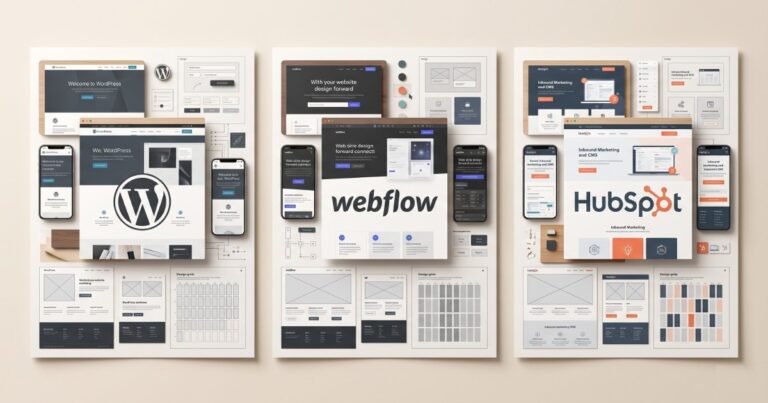
At Zelthra, for example, our development work includes:
Each platform has different strengths.
WordPress can be a strong choice when you need flexibility, custom functionality, extensive integrations, or eCommerce capabilities.
Webflow can be an excellent option for design-focused marketing websites that require strong visual control and managed hosting.
HubSpot CMS can be particularly valuable for businesses that want their website closely connected with CRM, marketing, and lead-generation activities.
The right company shouldn’t simply recommend the platform they use most. They should recommend the platform that makes sense for your business.
4. What Does Your Website Development Process Look Like?
A professional development company should be able to explain its process clearly.
While every company works differently, a typical project may involve:
- Discovery and requirements
- Sitemap and content planning
- Wireframes or design
- Development
- Responsive implementation
- CMS setup
- Integrations
- SEO and technical optimisation
- Testing
- Launch
- Post-launch support
Ask what happens at each stage.
You should also understand when you’ll be involved in the process and how feedback is handled.
A clear process reduces misunderstandings and makes it easier for everyone to stay aligned.
5. Will My Website Be Custom-Built or Based on a Template?
This is an important question because two websites can look similar on the surface while being completely different underneath.
A template-based website can be perfectly suitable for some businesses.
However, if your business requires a unique user experience, custom functionality, or a highly specific content structure, custom development may be a better option.
Ask the development company:
- Are you using a pre-built theme?
- Are the layouts customised?
- Will the code be customised?
- Can new sections be added later?
- Can the website scale as the business grows?
The answer should match your long-term requirements.
For businesses that need a website built around their specific goals, Custom Website Development can provide considerably more flexibility.
6. How Do You Handle Mobile and Responsive Development?
Your website shouldn’t only be designed for a desktop screen.
People access websites from phones, tablets, laptops, large monitors, and many other screen sizes.
Ask how the development company handles responsive design.
A properly responsive website should consider:
- Mobile navigation
- Typography
- Spacing
- Images
- Buttons
- Forms
- Tables
- Cards
- Interactive elements
- Page layouts
Don’t simply ask whether the website is “mobile-friendly.”
Ask the company how they actually test and optimise the website across different screen sizes.
7. Is SEO Included in the Development Process?
SEO shouldn’t be something that gets considered only after the website launches.
Technical SEO should be part of the development process from the beginning.
Ask whether the development company handles things such as:
- Page titles
- Meta descriptions
- Heading structure
- URL structure
- Canonical tags
- XML sitemap
- Robots.txt
- Image alt text
- Internal linking
- Schema markup
- Mobile responsiveness
- Page performance
- Redirects
A developer doesn’t necessarily need to provide a complete SEO campaign, but the website should be built on a technically sound foundation.
For businesses that need deeper technical optimisation, dedicated Technical SEO support can be added alongside development.
8. How Do You Handle Website Performance?
A beautiful website isn’t very useful if visitors have to wait several seconds for pages to load.
Performance should be considered throughout development rather than treated as a final-stage task.
Ask how the development company handles:
- Image optimisation
- CSS
- JavaScript
- Fonts
- Third-party scripts
- Lazy loading
- Caching
- Page structure
- Core Web Vitals
Performance can also vary significantly depending on the platform and how the website is developed.
A good developer should be able to explain what they are doing to keep the website efficient.
9. What Happens After the Website Goes Live?
Website development doesn’t necessarily end when the website is launched.
Your business may need updates, bug fixes, new pages, security updates, performance improvements, or ongoing development.
Ask:
- Do you provide post-launch support?
- Is maintenance included?
- How are future changes handled?
- What happens if something breaks?
- Is support charged hourly or through a monthly plan?
This is particularly important for WordPress websites because regular maintenance can be necessary depending on the setup.
For businesses that want ongoing technical assistance, a Website Maintenance & Support service can provide continued help after launch.
10. What Exactly Is Included in the Price?
Never compare website proposals based only on the final number.
Two companies may quote completely different amounts because they’re including completely different deliverables.
Ask whether the proposal includes:
- Design
- Development
- Number of pages
- CMS setup
- Responsive development
- Forms
- Integrations
- Content migration
- SEO setup
- Analytics
- Testing
- Launch
- Training
- Post-launch support
Also ask what isn’t included.
This can prevent unexpected costs later in the project.
Agency vs Freelancer: Which Should You Choose?
There isn’t a universal answer.
A freelancer can be an excellent option for smaller projects or businesses that need a direct relationship with one developer.
An agency can be useful when the project requires multiple skill sets, larger-scale development, design, SEO, content, or ongoing support.
The important thing is to evaluate the actual person or team working on your website rather than choosing based only on the label “agency” or “freelancer.”
Consider:
- Project complexity
- Budget
- Required expertise
- Communication
- Availability
- Ongoing support
- Long-term requirements
For some businesses, a specialist developer is the perfect fit. For others, having a development team provides additional value.
Red Flags to Watch For
Choosing a development company becomes easier when you know what warning signs to look for.
Extremely Low Quotes
A very low quote may look attractive, but find out exactly what’s included before making a decision.
No Relevant Portfolio
If a company cannot show examples of similar work, ask why.
No Clear Process
If they can’t explain how the project will be planned, developed, tested, and launched, that’s worth considering carefully.
Promising Guaranteed SEO Rankings
No legitimate development company can guarantee specific Google rankings.
No Post-Launch Plan
Ask what happens after launch. A website needs to be maintained and improved over time.
Poor Communication
If communication is already difficult before the project starts, it may become even more challenging during development.
Overcomplicated Technology
Your website doesn’t need every possible feature.
A good development partner should recommend technology based on your requirements rather than adding complexity for the sake of it.
How to Compare Website Development Proposals
When comparing proposals, create a simple checklist.
Look at:
Scope
What exactly are they building?
Platform
Which CMS or technology will be used?
Design
Is the design custom or template-based?
Functionality
What features and integrations are included?
SEO
What technical SEO work is included?
Performance
How will the website be optimised?
Timeline
How long will development take?
Support
What happens after launch?
Cost
What is included and what costs extra?
This makes it much easier to compare two proposals objectively.
Don’t Choose Based Only on Price
Website cost matters, but the cheapest proposal isn’t automatically the best value.
A poorly developed website may eventually require:
- Redesign
- Performance fixes
- Security work
- Plugin replacement
- SEO corrections
- Content restructuring
- Migration
That can make the original “cheap” website considerably more expensive over time.
Instead, look at the total value of the project.
You can also use our guide on How Much Does a Website Cost in 2026? to understand the different factors that influence website development pricing.
What Should a Good Development Partner Provide?
A strong website development partner should bring more than technical skills.
They should be able to:
- Understand your business goals
- Recommend appropriate technology
- Build responsive websites
- Follow good development practices
- Consider SEO during development
- Communicate clearly
- Test before launch
- Provide documentation or training
- Support the website after launch
- Build with future growth in mind
The relationship should feel like a partnership rather than simply paying someone to build a set of pages.
A Simple Checklist Before Hiring
Before you choose a website development company, ask yourself:
☐ Have I reviewed their portfolio?
☐ Have I looked at live websites they’ve built?
☐ Do they understand my industry or business model?
☐ Do they have experience with the platform I need?
☐ Is their development process clear?
☐ Is responsive development included?
☐ Is technical SEO considered?
☐ Have they explained performance optimisation?
☐ Do I understand exactly what I’m paying for?
☐ Is post-launch support available?
☐ Can the website scale with my business?
If you can answer these questions confidently, you’re in a much better position to make the right decision.
Final Thoughts
Choosing a website development company shouldn’t come down to finding the lowest quote or the company with the most impressive-looking portfolio.
The right development partner should understand your business, recommend the right technology, build a strong technical foundation, and create a website that can grow with you.
Take the time to ask questions before signing a contract.
Understand what you’re getting, how the website will be built, what platform will be used, how SEO and performance will be handled, and what support you’ll receive after launch.
Most importantly, choose a company that sees your website as a long-term business asset rather than simply another project to complete.
At Zelthra, we work across WordPress, Webflow, and HubSpot CMS to build websites around each client’s requirements, from custom business websites and landing pages to platform migrations and ongoing website support.
If you’re planning a new website or considering a rebuild, we’d be happy to help you determine the right approach for your business.
Frequently Asked Questions
Start by reviewing relevant portfolio work, understanding the company’s development process, checking their technical expertise, and confirming what is included in their pricing and post-launch support.
Costs vary depending on the number of pages, platform, design requirements, functionality, integrations, content, SEO, and ongoing support. There is no single price that applies to every website project.
Both can be good options. Freelancers may work well for smaller or specialised projects, while agencies can be useful for larger projects requiring multiple areas of expertise.
It depends on your requirements. WordPress, Webflow, and HubSpot can all be excellent choices. The right platform should be selected based on your functionality, content, marketing, budget, and long-term goals.
Technical SEO should be considered during development. This includes areas such as site structure, metadata, headings, URLs, redirects, performance, mobile responsiveness, and crawlability.
Ask about their previous work, development process, platform expertise, pricing, timeline, SEO approach, responsive development, testing, and post-launch support.
Depending on the development company, you may receive training, maintenance, technical support, bug fixes, updates, and ongoing development. Always clarify this before starting the project.
Need Help With Your Website?
Whether you need HubSpot CMS development, Webflow development, WordPress development, or technical SEO, Zelthra can help you build a website that performs.